Chapter 3·Part I, Deciding to Raise
The Only Reason to Raise Venture Capital
Fundraising is costly. It takes a huge amount of founder time and, if successful, dilutes your equity and control. So you need to have a good reason to raise money.
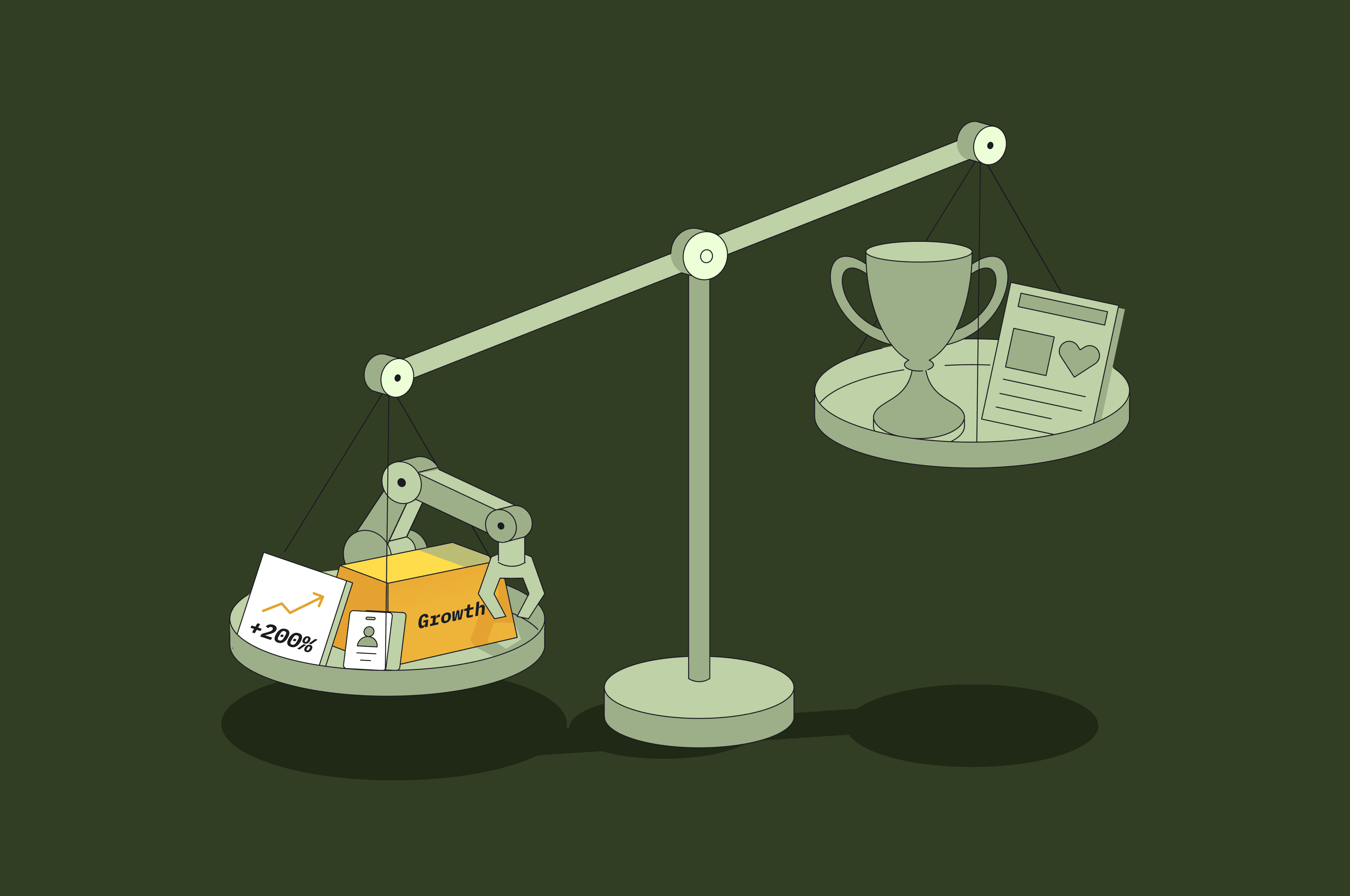
The press loves to write about big fundraises. Announcing a round is a good way to get the likes. Pretty much everyone in the industry treats it as a trophy, as success. It's the thing we get to celebrate between the day you start and the day you exit, so we celebrate it loudly.
But a fundraise is not a trophy. It's a tool, and founders who confuse the two develop a specific and fatal skill: the founders who most believe fundraising is the goal, and who get great at it, become the best in the world at incinerating money. If raising money is your scoreboard, your incentives warp to burn capital so you can raise again and put another point on the board. Yet the only thing that should actually matter is terminal value: what the company is worth at the end of your story.
There is exactly one good reason to raise money: capital is the fundamental limit on your growth. The specifics vary by business but the theme never does. You need to hire people you can't currently afford. You need to pay higher salaries because a frontier lab keeps poaching your best engineers. You need GPUs, or inventory, or robots, or Meta ads. In every version, there is growth sitting on the other side of money, and money is the thing needed to unlock that growth.
Hold your own reasoning up against that standard since there are many bad reasons to raise capital:
"It looks fun." It is not fun. Maybe your seed was easy. Maybe your A was easy. But at some point a fundraise will punch you in the face.
"We don't know what else to do." Raising money because growth has stalled and a round feels like a rallying milestone is a terrible idea. It won’t fix the business, in fact it will only further distract you. It just adds investors to the list of people watching it stall. Also investors will probably balk.
"Our competitor raised." This is a natural response to seeing a competitor capture a bunch of attention and amass a warchest that you fear will be deployed against you. Yet customers don't buy products because of funding announcements, they buy the best thing. That said, if you sell to enterprises and you're losing deals because customers doubt you'll survive against a better-capitalized rival, that's real. But notice it's a legitimate reason to fundraise precisely because it collapses back into the one good reason: money is your barrier to growth.
A related misconception is when a founder attempts to raise from all the ‘good’ investors to starve out potential competitors. Yet in practice there is always more capital available to good founders doing good things. When you vacuum up a huge round every investor who didn’t participate starts hunting for your competitor because now the category looks hot. Congrats, you have personally catalyzed your rival's fundraise.
"Our investors think we should." Insiders sometimes push you to raise because they want a markup or a follow-on with a fancy firm. New investors will always tell you raising is a great idea because they'd like a piece of your business. If their advice happens to coincide with a genuine capital constraint on growth, wonderful! Otherwise, stay the course.
One reason that ebbs and flows out of fashion is raising money simply because the market is hot and you can. This is tempting but dangerous. There was an entire cohort of companies that raised massive rounds in 2021 just because they could. Many of those startups are now zombie businesses with enormous piles of slowly burning cash, shackled to valuations they’ll never justify. The executive team can't walk away because of the promises made and the investors have no incentive to admit defeat. As a founder this is a much worse place to be than having raised less at a sensible price.
A related fantasy is raising extra now to hedge against a future downturn. This assumes you can time macro cycles. You can't. Nobody can. If you could, you should run a hedge fund.